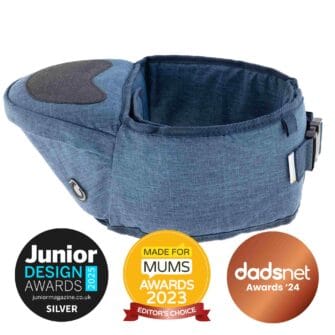
When choosing a carrier for your baby or toddler there are a plethora of options which, whilst this can offer amazing choice, can also feel overwhelming. From structured carriers and soft wraps to the increasingly popular hipseat, it can be tricky trying to decide what’s right for your family.
So, hipseat or baby carrier, which is actually best for you and your baby?
The answer depends on your child’s age, your lifestyle and, perhaps most importantly, the quality and design of the product you choose. Looking at the differences, safety considerations and practical realities of both options to help you make an informed decision.
What is a Hipseat?
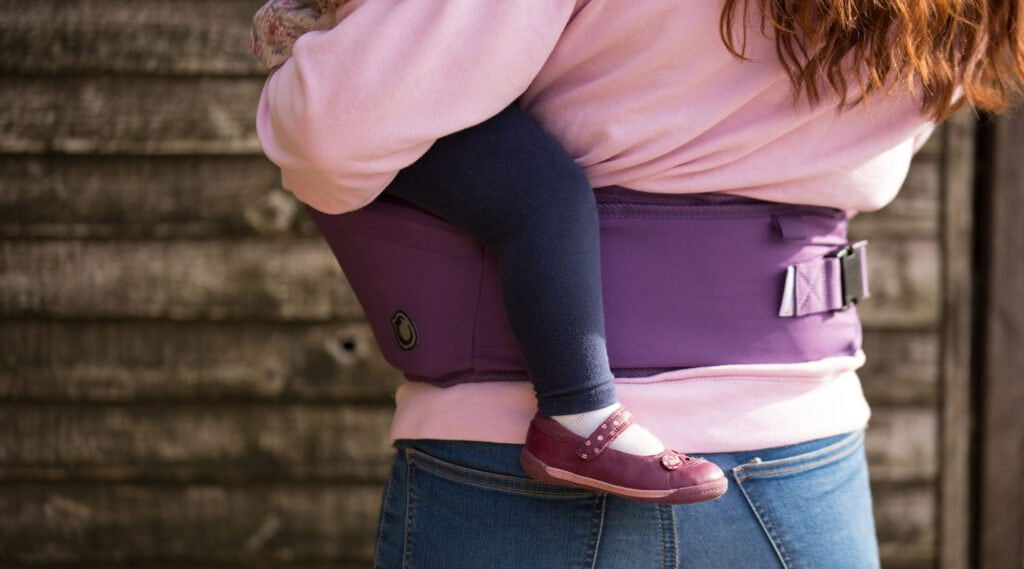
A hipseat is a structured carrier that supports your baby or toddler on your hip. It has a firm, gently angled seat that wraps around your waist.
Unlike traditional baby carriers that distribute weight across your shoulders and back, a hipseat works by:
- Providing a stable platform for your child to sit on
- Supporting your lower back
- Reducing strain on your arms during “up and down” stages of the toddler years
The original Hippychick Hipseat was created by Hippychick founder Julia Minchin. It helps parents who often lift and carry toddlers who want independence but also want to be picked up frequently.
What is a traditional Baby Carrier?
A baby carrier typically uses straps, panels and sometimes buckles to secure your baby to your body. There are several types of baby carriers to choose from:
- Structured carriers
- Wraps
- Slings
- Hybrid designs
Toddler and baby carriers are designed for hands free carrying and are particularly useful during the newborn stage when head and neck support is essential.
Hipseat vs Baby Carrier: Key Differences
1. Age & Stage of Your Baby
Newborn Stage (0–4 months)
For very young babies, structured carriers and wraps often offer:
- Full body support
- Head and neck stabilisation
- Close contact positioning
A hipseat is typically better suited to babies over 6 months old with strong head control.
If your baby is under 6 months, a carrier may be more appropriate.

6 Months to Toddler Stage
This is where hipseats truly come into their own.
Once babies can sit unaided, have strong head and neck control and want to explore independently, parents often find themselves repeatedly lifting them up and down. This is where a hipseat really helps. It reduces arm strain, protects your lower back and makes frequent up-and-down transitions quicker and easier.
For toddlers, especially those in the “up, down, up again” phase, a hipseat is often more practical than a full carrier.
2. Convenience & Everyday Use
Baby Carrier Pros
- Fully hands-free
- Ideal for longer walks
- Secure for naps on the go
Hipseat Pros
- Quick to use
- No complex strapping
- Ideal for short trips, errands and holidays
- Excellent for toddlers who don’t want to be fully strapped in
Many parents find they use both, a carrier in the early months and a hipseat during toddlerhood.

3. Back Support & Parent Comfort
One of the most common concerns from parents is back pain.
Traditional carriers distribute weight across the shoulders, upper back and waist (depending on design). However, if poorly fitted or lower quality, they can cause shoulder strain and upper back tension.
A well-designed hipseat supports your baby’s weight from underneath, reducing pressure on arms, wrists and your upper spine.
The angled seat design is crucial here and it’s important to remember that not all hipseats are created equal! Poorly designed or cheaper versions may:
- Sit flat completely flat or be sharply angled which can cut into your hip
- Lack lumbar support
- Use lower quality foam that compresses over time
That’s why it’s essential to choose a hipseat with a strong reputation and proven performance.

Are all Hipseats and Carriers the same?
In recent years, cheaper imitations of hipseats have entered the market. While they may look similar at first glance, there can be significant differences in:
- Build quality
- Stitching strength
- Foam density
- Waistband support
- Safety testing standards
When choosing either a hipseat or a carrier, look for established brand history, consistent customer reviews, clear weight guidelines, proven durability and UK safety compliance.
Products with a long track record and strong reviews provide reassurance that they’ve been tested in real family life.
Safety Considerations: What Truly Matters
Whether you choose a hipseat or a carrier, safety should always come first.
Key Safety Factors to Consider:
1. Correct Weight Range
Always follow manufacturer guidelines regarding minimum and maximum weight.
2. Hip Positioning
Your baby’s hips should be supported in a natural “M” shape, with knees slightly higher than bottom.
3. Secure Waistband Fit
A hipseat should fit snugly around your waist to prevent slipping.
4. Quality Fastenings
Look for strong, reliable buckles and reinforced stitching.
Choosing a product from a brand with years of experience in baby products provides additional reassurance.
Which Is Best for You – Hipseat or Carrier?
Choose a Baby Carrier If:
- Your baby is a newborn
- You need hands-free carrying for longer walks
- You want front or back carrying options
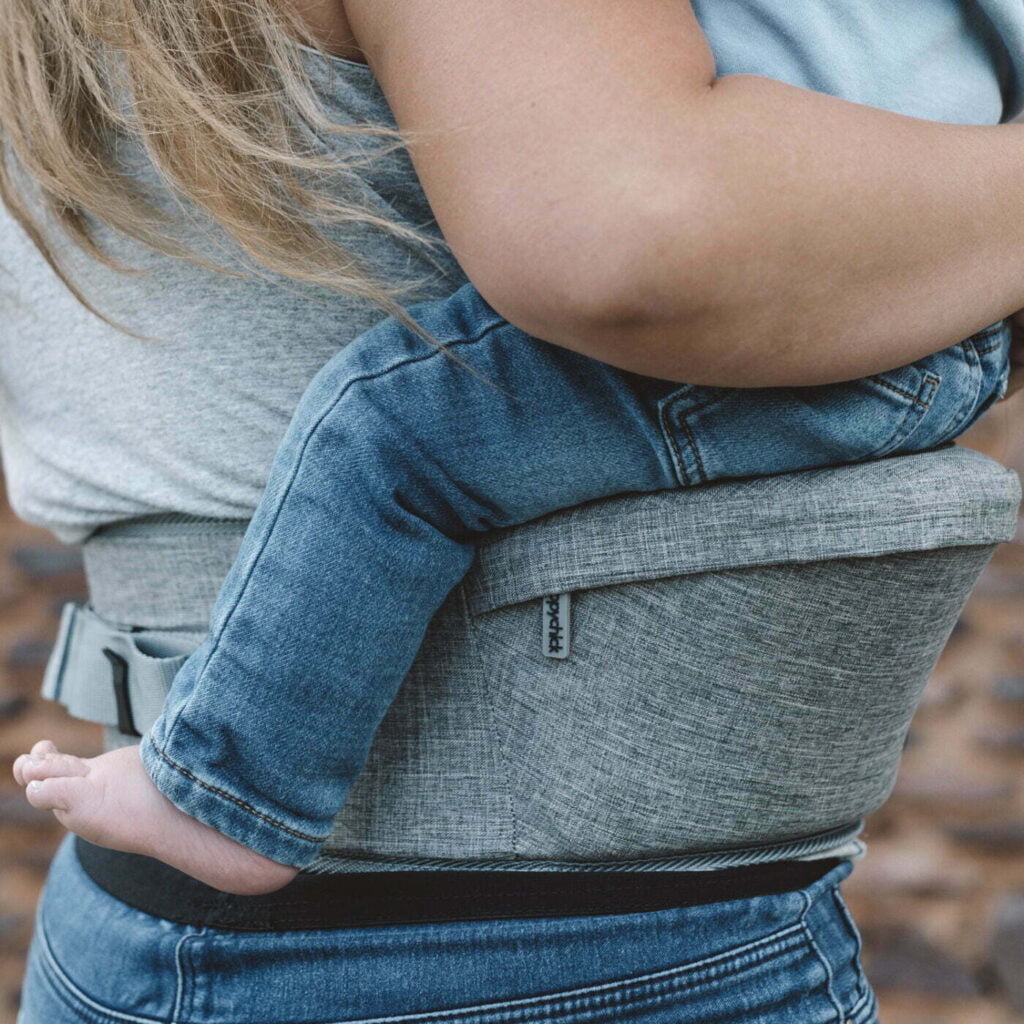
Choose a Hipseat If:
- Your baby is 6+ months
- You have a toddler who constantly wants lifting
- You experience arm or shoulder strain
- You want something quick and easy for short trips
For many families, the answer often isn’t one or the other it’s both, used at different stages. As babies grow into toddlers, their needs change. What once worked perfectly at 3 months may feel cumbersome at 18 months.
Parents often report that toddlers resist being fully strapped into carriers, quick errands become physically tiring and lifting repeatedly strains wrists and lower back.
A hipseat offers great freedom for your child, reduced physical strain for you and a practical solution for everyday parenting.
Long-Term Value: Why Quality Matters
When comparing options, it can be tempting to focus on price alone. However, baby carrying products are used daily and often for years.
Investing in a quality hipseat or carrier means:
- Better durability
- Safer materials
- More comfortable support
- Stronger resale value
- Greater peace of mind
Reading reviews and choosing a brand with an established history helps ensure you’re not compromising on safety or support.
Helpful Hippychick
Discover more helpful tips, products, and articles designed to support you through pregnancy, babyhood, and the toddler years. Plus, enjoy exclusive offers when you sign up for our mailing list!
FAQs
What age is best for a hipseat?
Most hipseats are best suited for babies who can sit unaided and have strong head control — typically around 6 months onwards.
Can I use a hipseat instead of a carrier?
For toddlers and short periods, yes. For newborns and longer walks, a carrier may be more appropriate.
Are hipseats safe?
Yes — when used correctly and chosen from a reputable brand with proper weight guidelines and safety testing.
Is a hipseat better for your back?
Many parents find that hipseats reduce arm, shoulder strain and back pain, especially during toddlerhood. Proper fit is essential.